
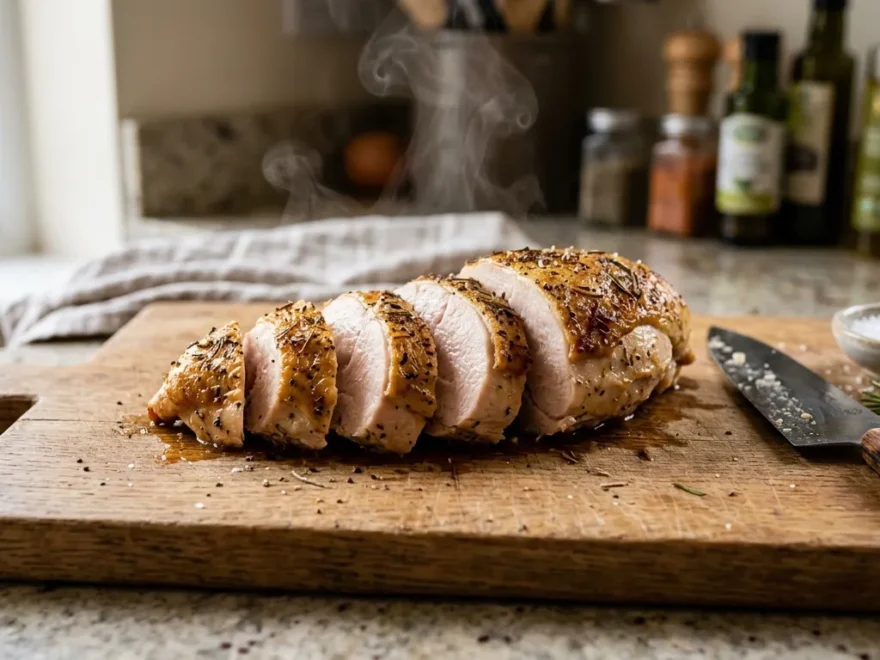
Dry, rubbery chicken breast has ruined more “healthy eating” attempts than any other food on the planet. You do everything right, cook it thoroughly, season it, and still end up with something that tastes like cardboard. Sound familiar?
Here’s the good news: juicy chicken isn’t about luck or a fancy technique. It comes down to a few simple rules that most people just never learned.
Let’s fix your chicken game for good. Once you’ve nailed this method, put it to work in our guide on How to Cook High Protein Dinners Your Family Will Love, which uses this exact juicy chicken technique in real weeknight recipes.
Why Chicken Turns Out Dry in the First Place
Before fixing the problem, it helps to understand it. Chicken breast is lean, which means it has very little fat to protect it during cooking. That makes it easy to overcook, and overcooking is the number one reason chicken turns rubbery and dry.
The most common mistakes:
- Cooking straight from the fridge instead of letting it come to room temperature
- Using high heat the entire time instead of adjusting
- Skipping a brine or marinade
- Not letting the chicken rest after cooking
- Relying on cook time instead of internal temperature
Fix these five things, and you’ll notice a difference immediately.
Step 1: Brine or Marinate Before Cooking
This step alone will transform your chicken. A quick brine or marinate adds moisture and flavor deep into the meat, not just on the surface.
Simple brine: dissolve 1/4 cup salt in 4 cups of water, submerge chicken for 20 to 30 minutes, then pat dry.
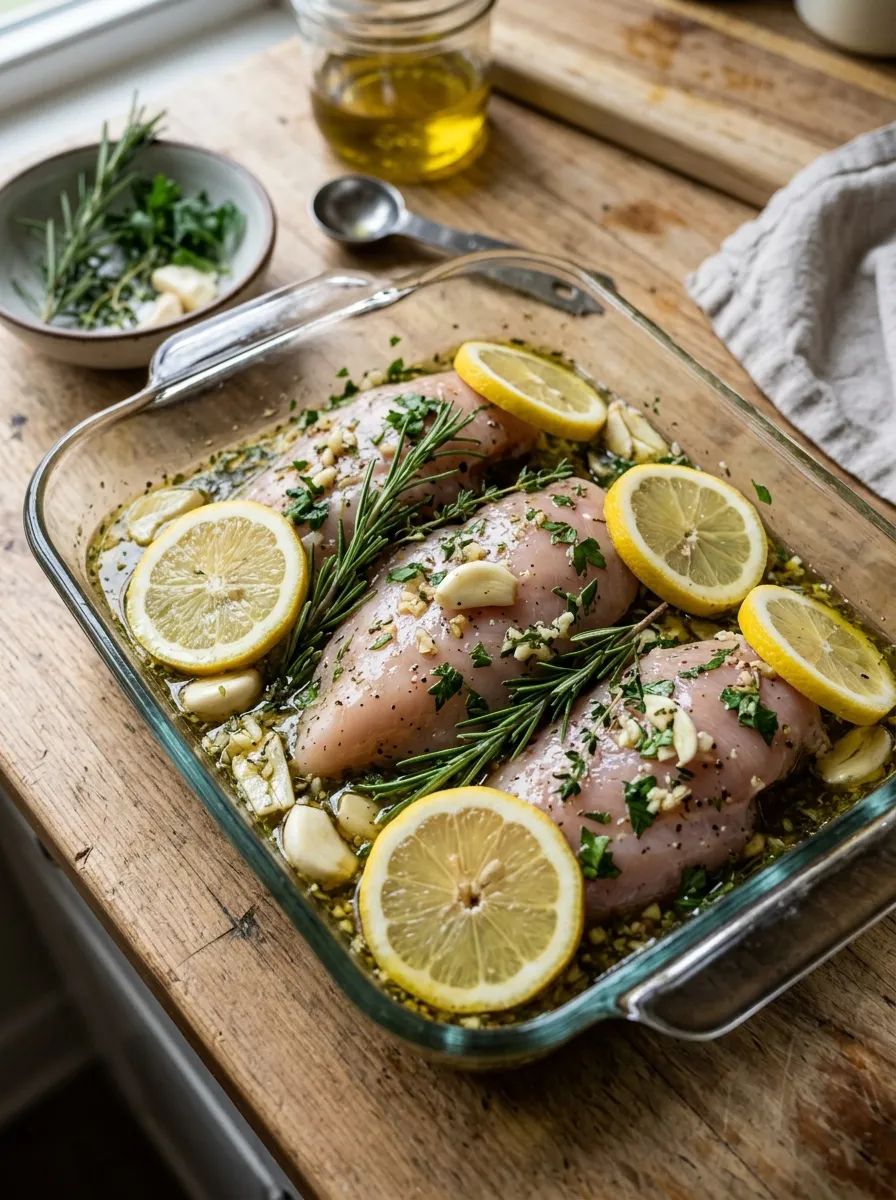
Simple marinade: olive oil, lemon juice, garlic, and your favorite herbs, marinated for at least 20 minutes (or up to overnight in the fridge).
Even 15 minutes makes a noticeable difference if you’re short on time.
Step 2: Pound It to an Even Thickness
Chicken breasts are naturally uneven, thick on one end and thin on the other. This means the thin end overcooks long before the thick end is done.
The fix is simple:
- Place chicken between two sheets of plastic wrap or parchment paper
- Use a meat mallet or rolling pin to gently pound it to an even thickness
- Aim for roughly 3/4 inch thick all the way across
This one step alone prevents a huge amount of uneven, dry cooking.
Step 3: Cook With the Right Heat and Timing
High heat the whole way through is one of the biggest chicken killers. Instead, use a two stage approach for the juiciest results.
Stovetop method:
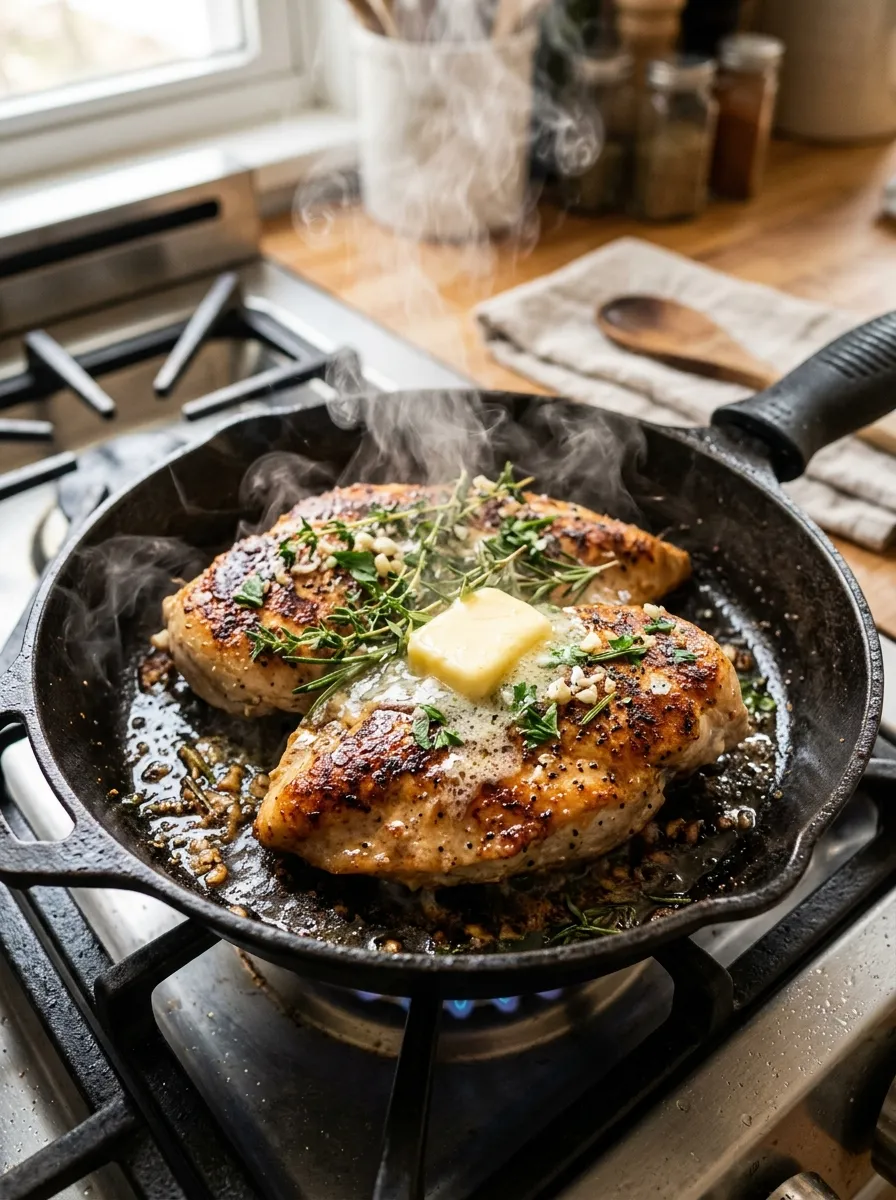
- Sear on medium-high heat for 2 to 3 minutes per side to build color
- Lower the heat to medium, cover, and cook until done through
Oven method:
- Bake at 425°F for 18 to 22 minutes depending on thickness
- For extra juiciness, sear first in an oven-safe pan, then finish in the oven
Step 4: Use a Thermometer, Not Guesswork
This is the single most reliable fix for dry chicken. Cutting into chicken to check doneness lets all the juices escape, and eyeballing it almost always leads to overcooking.
Instead:
- Insert an instant-read thermometer into the thickest part of the chicken
- Pull it off the heat at 160°F, since the temperature will continue rising a few more degrees while resting
- Aim for a final resting temperature of 165°F
A five dollar thermometer will do more for your chicken than any recipe trick.
Step 5: Let It Rest Before Cutting
This step gets skipped constantly, and it matters more than people realize. Cutting into chicken immediately after cooking lets all those juices spill out onto the cutting board instead of staying in the meat.
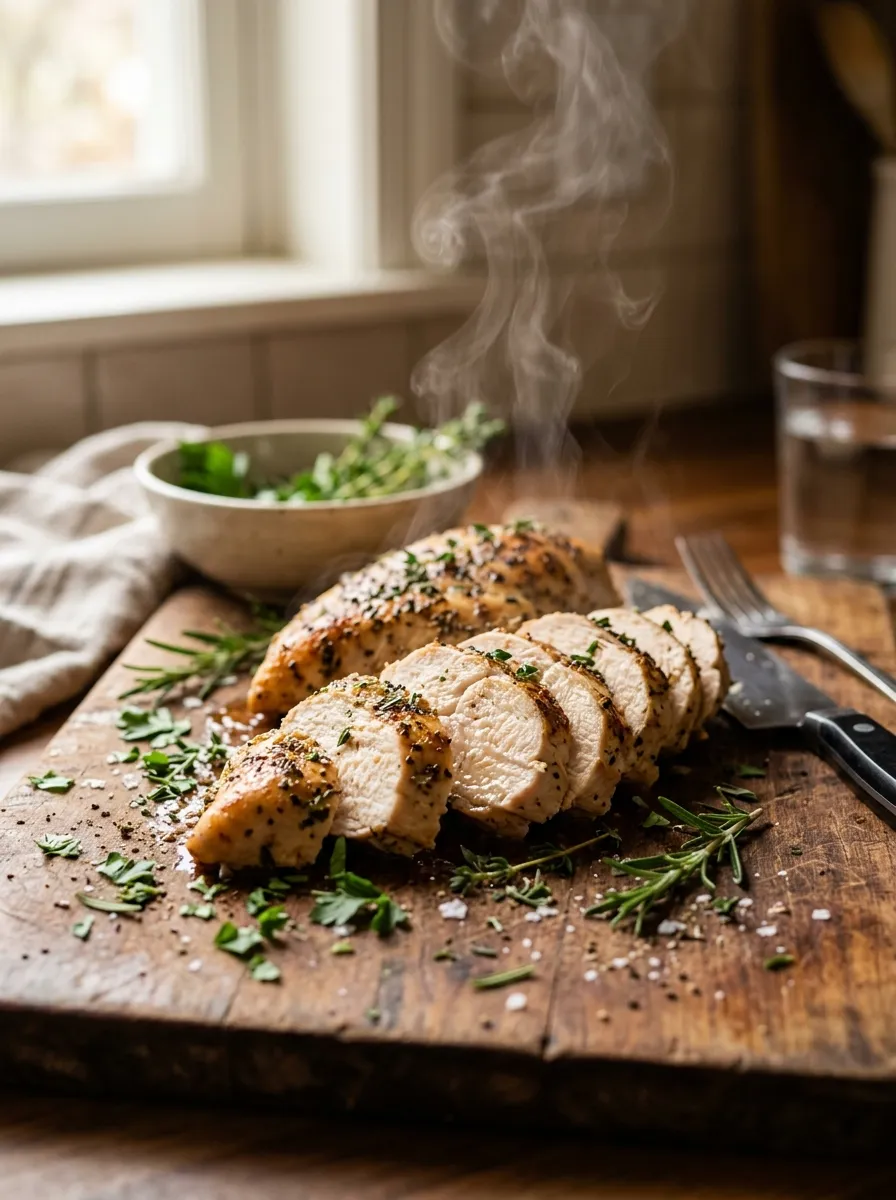
- Let chicken rest for 5 to 10 minutes after cooking
- Tent loosely with foil to keep it warm
- Resist the urge to slice right away, patience pays off here
Quick Troubleshooting Guide
Still not getting the results you want? Check these common issues:
- Chicken tastes bland: season more generously, and salt earlier in the process, not just at the end
- Still too dry: double check your thermometer temperature, you’re likely overcooking slightly
- Uneven cooking: make sure you’re pounding chicken to an even thickness before cooking
- Tough texture: try a brine next time, it makes a bigger difference than most people expect
Final Thoughts
Juicy chicken isn’t about a secret recipe, it’s about a handful of small habits done consistently: brining or marinating, even thickness, the right heat, a thermometer, and a proper rest. Nail these five steps, and dry chicken becomes a thing of the past.
Try this method the next time you cook chicken and taste the difference for yourself.
Save this article for later so you always have a foolproof method for juicy, high protein chicken!