
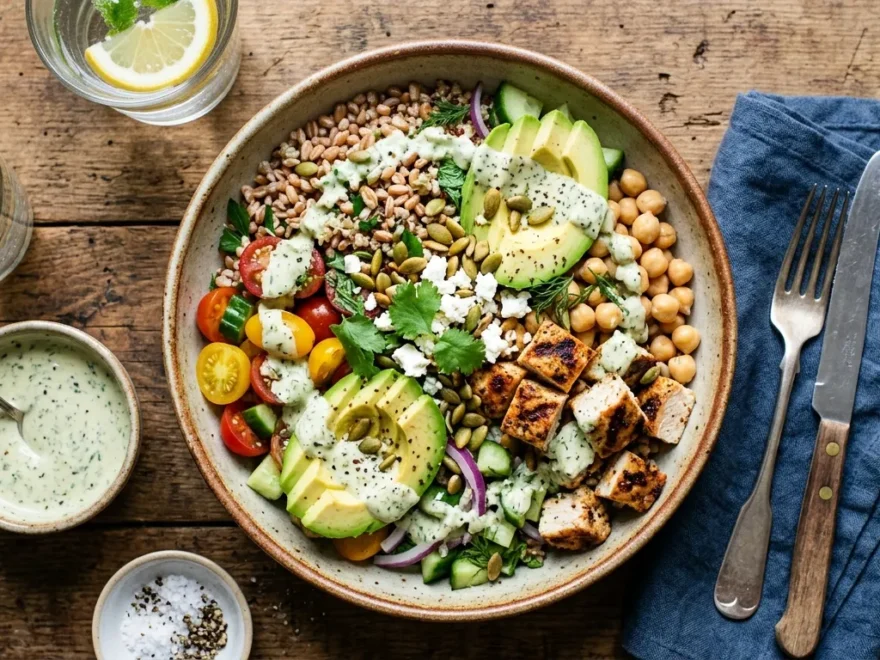
Let’s be honest, most salads are a lie. You order the “healthy” option at lunch, and forty-five minutes later you’re hunting for a snack because a bowl of lettuce and three cherry tomatoes was never going to hold you. The problem isn’t salads themselves, it’s what’s missing from them.
As registered dietitian Dr. Alexander Ford explains, protein slows digestion and keeps you feeling full longer, which is exactly why a salad without it falls apart by mid-afternoon. Here’s how to fix that for good.
Why Most Salads Leave You Hungry
A typical green salad, lettuce, a few veggies, maybe some croutons, often has less than 5 grams of protein total. That’s nowhere close to what your body needs to feel satisfied.
Here’s what usually goes wrong:
- The “protein” is an afterthought, like a sprinkle of cheese or a few nuts
- The dressing is mostly oil and sugar, with nothing to add staying power
- Portions are too light to function as an actual meal
- There’s little fiber beyond the lettuce itself
The fix isn’t complicated, it just means rethinking how you build the bowl from the start.
Step 1: Start With a Serious Protein Source
Before you even think about lettuce, decide on your protein. This should be the anchor of your salad, not an afterthought sprinkled on top.
Aim for 20 to 25 grams of protein from one or two of these:
- Grilled chicken or turkey
- Salmon, tuna, or shrimp
- Hard boiled eggs
- Chickpeas, black beans, or lentils
- Tofu or tempeh
- A scoop of cottage cheese
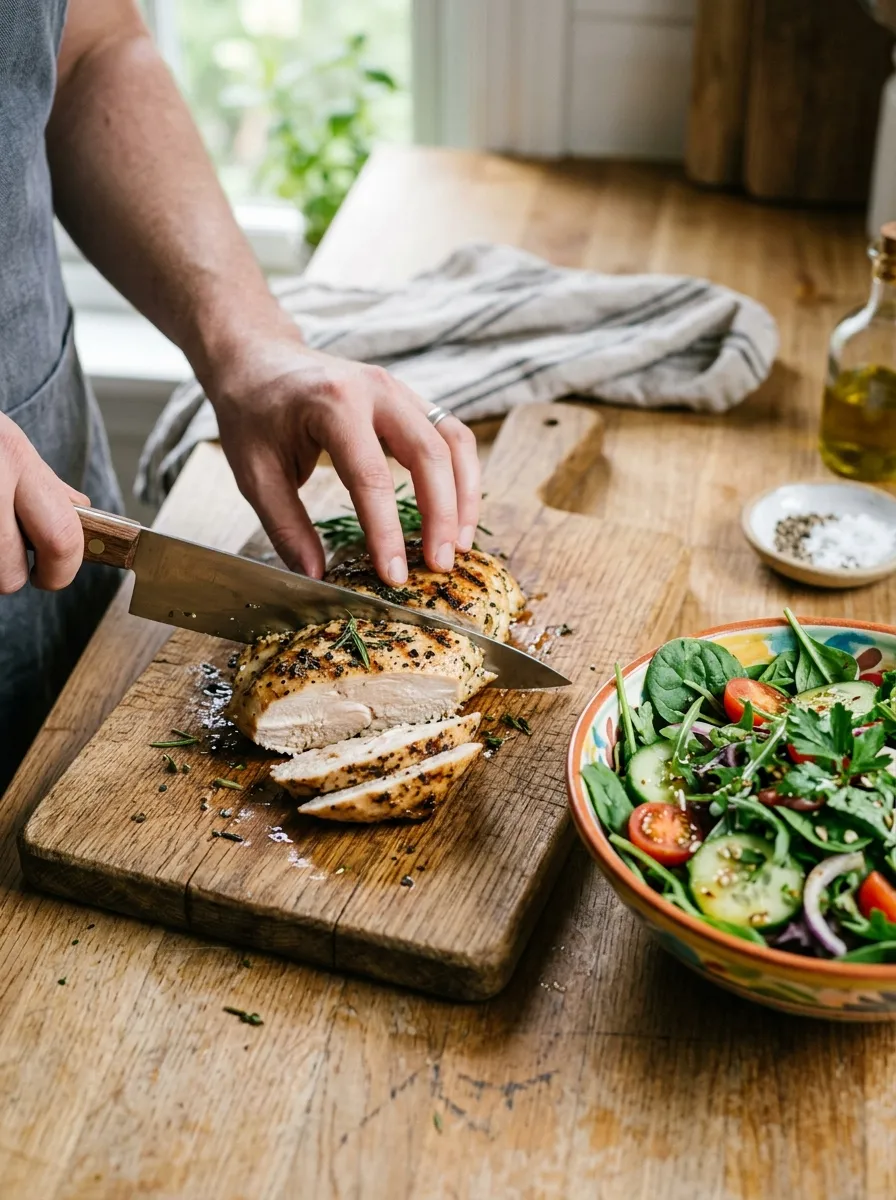
Combining an animal protein with a plant based one, like chicken and chickpeas, is an easy way to boost the total without piling on too much of one ingredient.
Step 2: Layer In Fiber-Rich Vegetables
Once your protein is locked in, build the rest of the bowl around fiber. This is what adds volume and keeps digestion slow and steady.
Good additions:
- Leafy greens as your base, spinach, arugula, or romaine
- Roasted or raw vegetables, bell peppers, cucumbers, broccoli
- A whole grain like quinoa or farro for extra protein and fiber
- Avocado for healthy fat and creaminess
Quinoa deserves a special mention here, since it’s one of the few grains that’s also a complete protein on its own.
Step 3: Make the Dressing Work For You
Most store bought dressings are mostly oil, sugar, and not much else. A protein-boosted dressing can make a bigger difference than people expect.
Try swapping in:
- A Greek yogurt-based ranch or Caesar dressing
- Tahini whisked with lemon and water
- A blended cottage cheese dressing for a creamy, tangy base
- A simple vinaigrette with a spoon of nut butter whisked in for richness
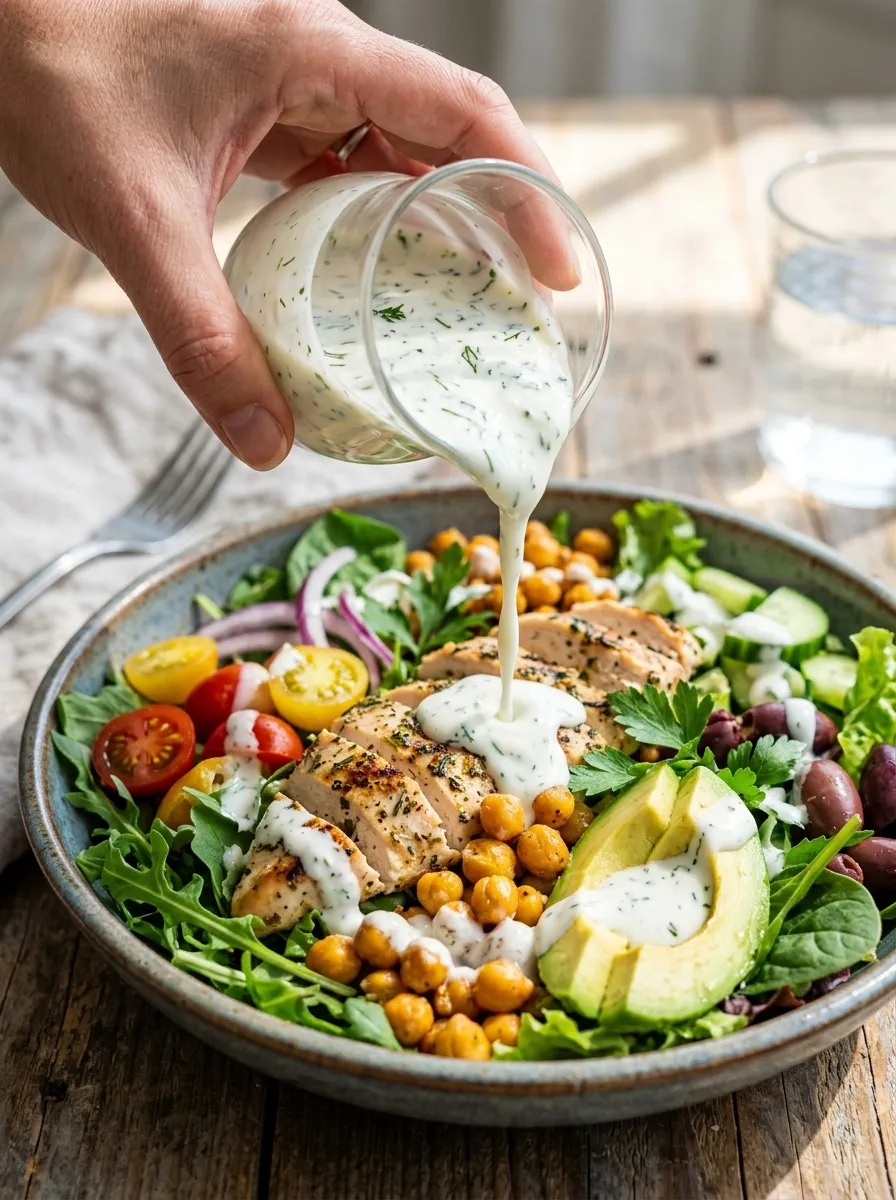
This one swap alone can add several extra grams of protein without changing how the salad tastes.
Step 4: Add Crunch and Texture
A salad that’s only soft textures gets boring fast. A little crunch makes every bite more satisfying, and many crunchy toppings bring extra protein along with them.
- Roasted chickpeas
- Toasted nuts or seeds, almonds, pumpkin seeds, or sunflower seeds
- Crumbled feta or shredded parmesan
- Crispy chickpea or lentil chips, crushed on top
4 High Protein Salad Combos to Try
Here are a few full builds to get you started:
- Mediterranean Bowl – grilled chicken + chickpeas + cucumber + feta + tahini dressing
- Southwest Salad – black beans + corn + avocado + grilled chicken + lime vinaigrette
- Tuna Power Salad – canned tuna + hard boiled egg + mixed greens + olive oil and lemon
- Quinoa Chickpea Bowl – quinoa + chickpeas + roasted veggies + Greek yogurt dressing
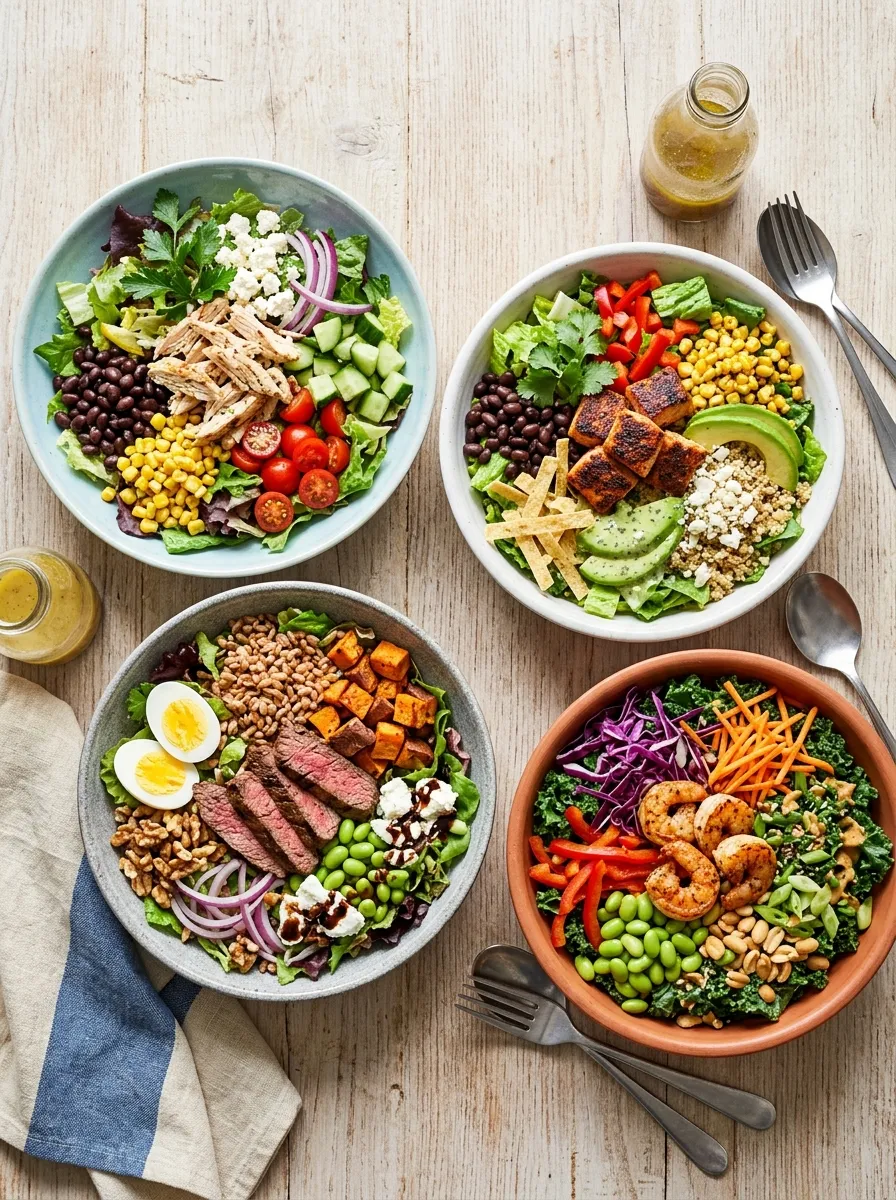
Each one lands comfortably in the 25 to 35 gram protein range, more than enough to actually hold you until your next meal.
Tips for Making This a Weekly Habit
A few small habits keep high protein salads easy to stick with:
- Batch cook your protein on a prep day so it’s ready to toss in all week
- Store dressing separately so your greens stay crisp instead of soggy
- Prep components, not full salads, so you can mix and match based on what sounds good
- Keep a rotating list of dressings so the same salad never feels repetitive
If you’re building out a full week of protein-forward lunches, our guide on How to Build the Perfect High Protein Lunch in Minutes covers more quick combos beyond salad that follow this same approach.
Final Thoughts
A salad can absolutely be a filling, satisfying meal, it just needs to be built with intention. Start with a real protein source, layer in fiber, upgrade the dressing, and add some crunch. Do that, and you’ll never wonder why you’re hungry an hour after lunch again.
Pick one combo from this list and build it for lunch tomorrow.
Save this article for later so you always have a high protein salad idea ready to go!